

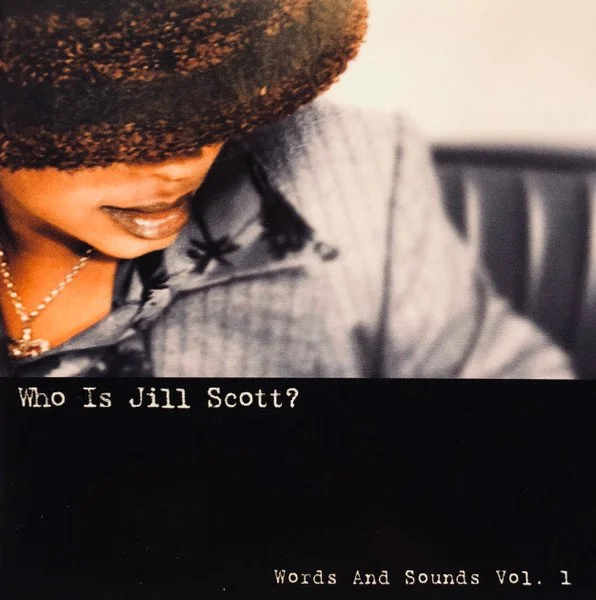
It’s been 25 years since Jill Scott asked us a question that still lingers in the air like incense, Who is Jill Scott? And somehow, even after all this time, the album still feels like both an introduction and an invitation into Jill’s sonic journal pages lined with love, longing, and liberation.
Released on July 18, 2000, Who Is Jill Scott? Words and Sounds Vol. 1 wasn’t just a debut; it was a breath of fresh, unfiltered Black womanhood. It arrived during the heart of the neo-soul era, a time when artists like D’Angelo, Erykah Badu, and Maxwell were redefining what soul music could sound like and what it could say. Jill’s presence in that moment didn’t just complement the wave, it deepened it. She brought a distinct fusion of spoken word and jazz phrasing, delivering poems like sermons over go-go–laced rhythms and live instrumentation layered with soul. Her music didn’t just play, it moved, conversed, and testified.
And behind her was a production team that understood the assignment. DJ Jazzy Jeff and his production house, A Touch of Jazz, helped craft the soundscape for this debut. It is a sound rooted in Philly soul, but stretched wide enough to hold hip-hop sensibilities, live jazz textures, and unfiltered emotion. You could feel the musicianship in every brush of the snare, every bassline that hugged the lyrics just right. This album wasn’t beat-driven, it was band-driven. And it gave Jill room to roam, to riff, to feel.
This wasn’t just music for the moment; it was music for the memory. And Jill knew that. You could hear it in her voice, soft but unwavering, warm but grounded, unafraid to stretch out syllables like she was tasting them. Each word chosen with care, like she knew exactly how it would sit on your heart.
From the very first lines of “Jilltro,” she wasn’t just singing, she was speaking directly to you. You could feel it in the way “A Long Walk” didn’t just describe a date, but a desire to be seen, to be held, to connect. The way “He Loves Me (Lyzel in E Flat)” bloomed from a whisper to a wail, each note a declaration that love could be both tender and triumphant. The way “Watching Me” peeled back layers of paranoia and politics, proof that Jill wasn’t afraid to balance the sensual with the spiritual, the personal with the political.
And then there were the interludes, the giggles, the pauses, the ambient noise that made you feel like you were eavesdropping. It was all intentional. One in particular, “I Think It’s Better,” remains a personal favorite. It’s a short, stunning spoken word piece set over smoky jazz instrumentation that floats effortlessly into “He Loves Me.” The transition is seamless, like one thought finishing another, and it captures so much of what makes this album feel alive. Just a few words, gently delivered, but they land like a decision made in real time quiet, powerful, and final.
The album felt lived-in, like the warm kitchen of your auntie’s house, where the speakers were dusty but the music was gospel. Jill gave us space to exhale. To be complex. To love unapologetically. To not have it all figured out. To be proud to be a Black woman. To say exactly how we felt, even if our voices cracked while doing it.
Twenty-five years later, Who Is Jill Scott? still resonates. Her voice echoes through our lives showing up in wedding playlists and heartbreak playlists. On quiet Sunday mornings and loud Saturday nights. In the first times we told someone “I love you” and the last times we believed it when they said it back.
Jill Scott didn’t just give us an album. She gave us permission. To feel everything. To ask better questions. To take the long walk and mean it.
And that question she posed on July 18, 2000? It was never really about her. It was about all of us. Because when you press play, even now, 25 years later, you don’t just hear Jill. You hear yourself.